How Pratham InfoTech Equipped Digital Literacy Labs with Primebook Laptops

Introduction
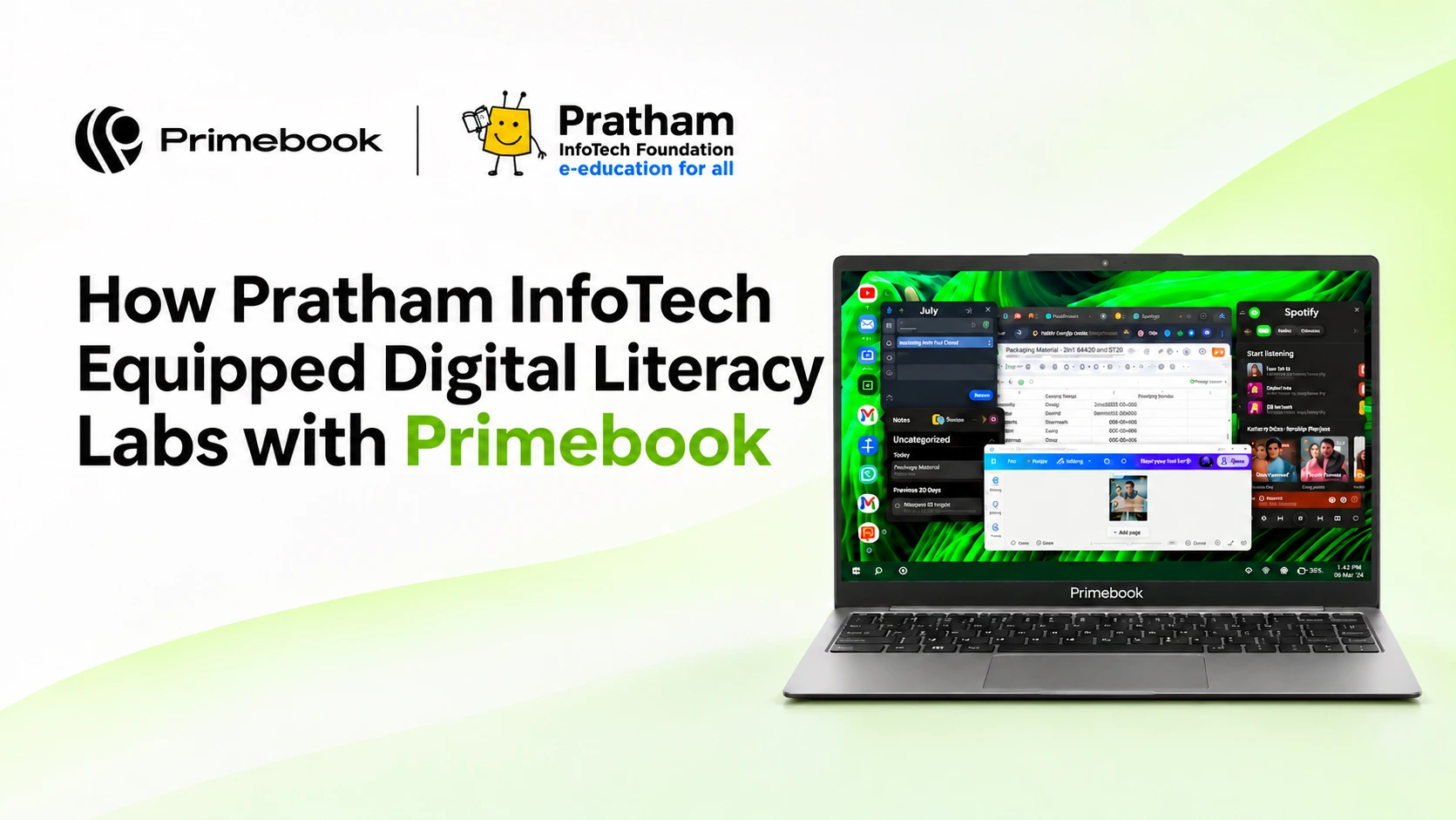
Pratham InfoTech Foundation (PIF) has used Primebook laptops for more than three years as part of its digital literacy initiatives. With 1,000+ units deployed, the foundation uses these devices to support hands-on computer education and productive computing.
This account explores PIF's educational approach, the factors that influenced its decision to choose Primebook over conventional desktops and tablets, and its experience using the devices across its digital literacy initiatives.
Pratham InfoTech Foundation: Advancing Digital Literacy Through Education
Pratham InfoTech Foundation's involvement in technology-enabled education dates back to 1998, when the Pratham Mumbai Education Initiative introduced computer-aided learning through 15 IT centres in municipal schools. In 2004, PIF emerged as a separate legal entity, building on this experience to expand digital education among underserved communities.
Its vision, “e-Education for all,” and mission of “Building a Nation that is Digitally Literate” reflect an emphasis on reducing barriers to technology and equipping disadvantaged learners with practical digital skills. PIF's work spans school education, digital literacy, STEM learning, youth employability and community development.
A significant part of its implementation model involves establishing and managing computer labs in schools and digital learning centres in communities. Through programmes such as STEM Digital Literacy as a Life Skill, learners are introduced to computer operations, software applications and cybersecurity, with more advanced topics including coding and cloud computing at later stages.
This approach places practical computer usage alongside conceptual learning. The objective is not limited to familiarising learners with digital content, but also includes developing the skills to operate applications and use computing tools independently.
Within this established educational model, Primebook became one of the computing platforms adopted to support PIF's digital literacy initiatives.
The Challenge: Selecting Computing Infrastructure for Digital Learning
For PIF, the requirements of an institutional computing deployment differed from those of an individual laptop purchase.
The foundation needed to balance device performance and portability with the constraints of programme budgets. The computing experience also had to suit hands-on digital learning, where learners practise computer operations and use applications rather than exclusively consuming educational content.
Administration presented another consideration. Equipment deployed for educational purposes required centralised management, including the ability to restrict access to websites and applications unrelated to learning.
PIF therefore evaluated alternatives to conventional desktops and tablets, looking for a combination of price-to-performance value, practical computing capabilities and manageable device administration.
Why PIF Chose Primebook Over Desktops and Tablets
PIF's decision to adopt Primebook was informed by the relationship between computing access, educational requirements and available programme resources.
1. Price-to-Performance Value for Wider Computing Access
According to PIF's feedback, Primebook offered an economical computing option that enabled more learners to be accommodated within available programme budgets, while maintaining practical usability for everyday computer education. For an organisation implementing digital literacy initiatives, this made device selection relevant to the reach of its educational activities.
2. Laptop Form Factor for Hands-On Digital Learning
PIF considered the laptop form factor better suited to computer education and hands-on digital learning than tablets. A physical keyboard and desktop-style working environment provide a practical setting for learning computer operations, navigating applications and undertaking productive computing tasks.
3. Portability for Educational Deployments
Portability was also among the foundation's stated requirements. Compared with conventional desktop-based setups, Primebook's laptop form factor offered greater flexibility in where devices could be placed and used within educational learning environments.
4. Centralised Device Management Through Prime Secure MDM
For PIF, managing devices across distributed digital learning environments was an important consideration alongside computing performance and cost. PrimeSecure MDM addressed this requirement through two capabilities highlighted in the foundation's feedback:
Centralised Control Over Non-Educational Usage: Administrators can centrally manage devices and restrict access to adult content, social media and other unauthorised applications or websites, helping maintain an environment focused on educational activities.
Simplified Management Across Distributed Learning Environments: PIF identified PrimeSecure MDM's simple and cost-effective management approach as suitable for administering devices across its digital literacy initiatives.
*Please Note: PrimeSecure MDM is available exclusively for bulk orders and institutional deployments. This feature is not available with individual Primebook purchases.
Also Read: Bulk Laptop for NGOs - Best Offer In India
What Three Years of Deployment Reveal
PIF's experience with Primebook over more than three years highlights three outcomes from its digital literacy initiatives:
Sustained Access to Computing: PIF's continued use of Primebook beyond the initial procurement period reflects the devices' ongoing role within its digital literacy initiatives.
Support for Structured Digital Education: PIF reports that Primebook has supported access to structured digital education through its ongoing learning programmes, aligning with the foundation's focus on practical computing skills.
Reliable Service Support: PIF identifies reliable service support as a positive aspect of its experience with Primebook over more than three years. The foundation's feedback recognises the role of post-purchase assistance in its institutional computing experience.
Also Read:
Conclusion
PIF's experience highlights the value of examining existing institutional deployments before making a technology procurement decision. Product specifications and initial quotations can establish what a device offers, but customer references provide a different perspective on how that technology fits into an operational learning environment.
For NGOs, CSR partners and educational institutions evaluating computing solutions, seeking evidence from comparable deployments can make procurement decisions more informed and better aligned with the requirements of their own programmes.
Editorial Transparency: This case study was developed using information shared by Pratham InfoTech Foundation and publicly available sources about its educational initiatives. Agentic AI assisted with source discovery, organisation and content structuring, while material facts were reviewed by Primebook's editorial team for accuracy and clarity. The deployment details and customer experiences presented are based on information provided by the institution.