Why is an Android Laptop Better than Windows for UPSC Aspirants?

Preparing for UPSC is not just about studying harder. It is about studying consistently, efficiently, and without interruption over a long period of time. With over 10–13 lakh candidates appearing for the UPSC exam every year, the preparation journey is both competitive and demanding.
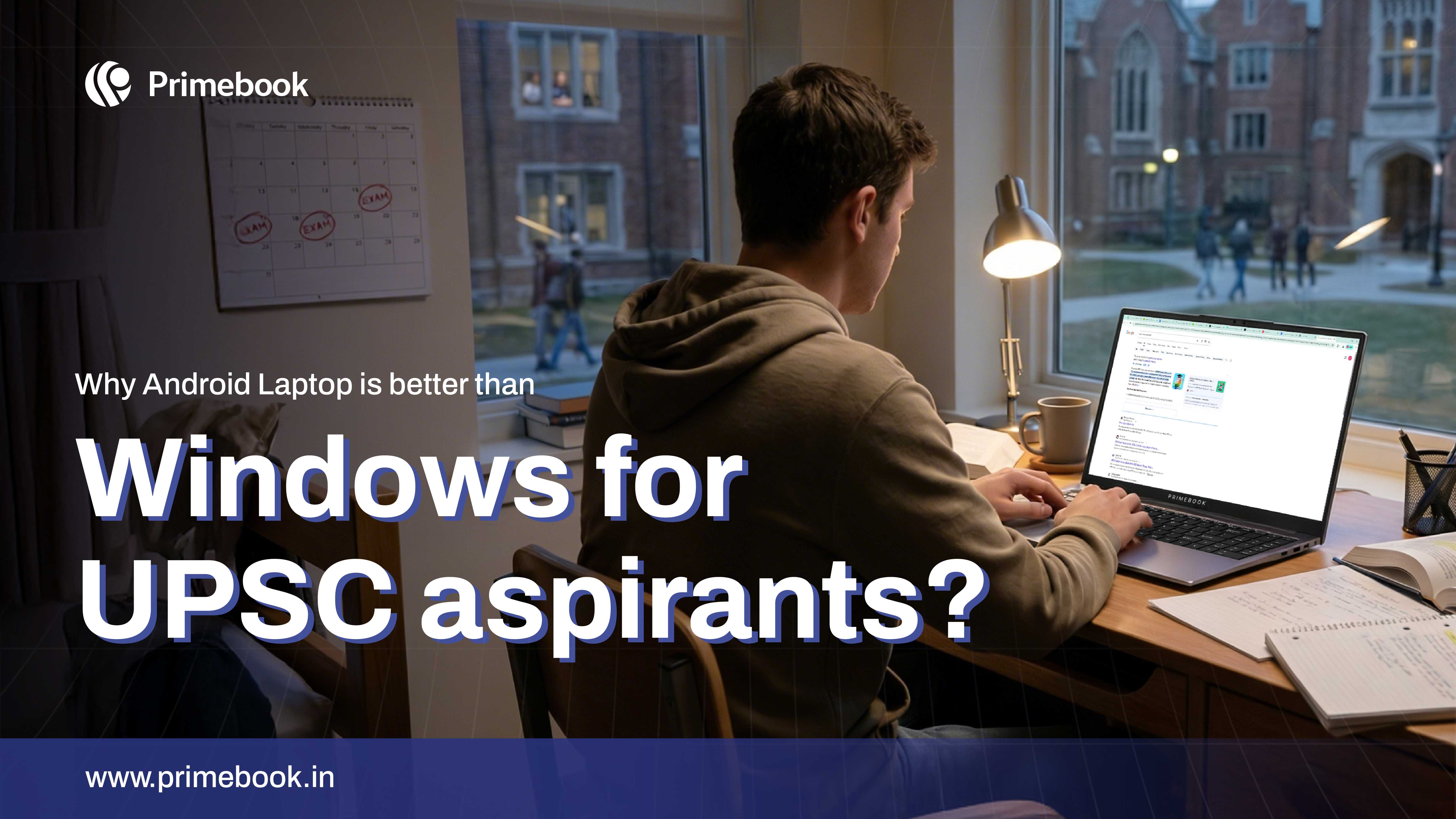
For most aspirants, a laptop becomes the primary study device. A large part of UPSC preparation now happens through online classes, recorded lectures, and test series, where aspirants learn, revise, and practice in one continuous cycle. They also use it to read and annotate current affairs, manage notes, and analyse mock test performance.
Over time, even small inefficiencies in how the system works can lead to lost time and reduced focus. This is where Android laptops begin to offer a more streamlined and reliable experience compared to traditional Windows laptops.
Here’s how Android laptops better support the way UPSC aspirants study, practice, and stay consistent throughout their preparation journey.
Understanding the System: Why Ease of Use Matters for UPSC Preparation
UPSC preparation already requires aspirants to manage vast content, multiple sources, and continuous revision. A system that takes time to understand or requires regular management adds to this load.
Windows Laptops
-
Designed for a wide range of desktop and professional use cases
-
Require familiarity with file systems, settings, and software installation
-
Initial setup and ongoing use can involve multiple steps
-
Users may need to manage updates, storage, and system behaviour over time
Android Laptops
-
Built around a simple, app-based interface
-
Minimal setup required before starting tasks
-
Apps can be installed and used without system-level adjustments
-
Day-to-day usage remains consistent without needing deeper system understanding
Why this difference matters
-
Less time is spent understanding the system, and more time goes into studying
-
Aspirants can start using the device immediately without a learning curve
-
Reduced dependence on external help for setup or troubleshooting
Also Read: Top Apps for UPSC Preparation
Handling Daily Study: Why Consistent Performance Matters for UPSC Prep
UPSC preparation involves moving between lectures, notes, PDFs, and mock tests throughout the day. The system’s ability to handle these tasks consistently becomes critical over long study hours.
Windows Laptops
-
Use a significant portion of system resources at baseline
-
Performance can vary with multiple active apps and browser tabs
-
On cost-effective devices, multitasking may slow down over time
-
Responsiveness often depends on higher hardware configurations
Android Laptops
-
Use system resources more efficiently at the base level
-
Maintain steady performance across everyday study tasks
-
Handle multitasking within practical hardware limits
-
Resume quickly without heavy reload cycles
Why this difference matters
-
Study sessions remain uninterrupted and efficient
-
Switching between lectures, notes, and tests feels seamless
-
Less time is lost waiting for the system to respond
Also Read: Why an Android Laptop is Better than Windows for College Students
Investing for Long-Term Prep: Why Value for Money Matters for UPSC Aspirants
UPSC preparation often spans multiple years, with aspirants investing in coaching, test series, books, and living expenses. In this context, a laptop is not just a purchase, but a long-term study companion that needs to justify its value consistently over time.
Windows Laptops
-
Often require stronger configurations upfront for stable day-to-day use
-
Entry-level options may feel limiting as the workload increases
-
Sustained performance may depend on upgrades or higher specifications
-
Certain tools and software may add to overall usage costs
Android Laptops
-
Built to run smoothly on balanced, everyday configurations
-
Less dependent on high-end specifications for routine tasks
-
Continue to perform reliably without frequent upgrades
-
Most study tools are accessible as apps without additional setup or cost
Why this difference matters
-
The laptop continues to deliver consistent utility over time
-
Lower dependence on upgrades protects the initial investment
-
Overall spending remains predictable throughout the preparation cycle
-
Aspirants can focus on preparation without worrying about device-related costs
Also Read: UPSC 2026 Exam Date, Registration Process, and Preparation Strategy
Accessing EdTech Platforms: Why App-Based Learning Matters for UPSC Prep
UPSC aspirants today attend classes, revise concepts, and attempt mock tests through apps offered by coaching institutes and EdTech platforms. The way a system supports these platforms directly affects how smoothly preparation happens day to day.
Windows Laptops
-
Most platforms are accessed through web browsers
-
Browser versions may not offer the same experience as dedicated apps
-
Features like offline access, app-specific navigation, or real-time syncing may be limited
-
Switching between tabs and tools can make workflows less direct
Android Laptops
-
Direct access to dedicated apps for learning platforms and test series
-
Apps are designed for smoother navigation and structured usage
-
Better support for offline access and in-app features
-
Consistent experience across phone and laptop environments
Why this difference matters
-
Most Indian EdTech platforms are optimised for Android apps, making the experience more complete and feature-rich
-
Aspirants can use platforms in the format they are designed for
-
Learning and testing become more structured and intuitive
-
Less dependency on managing multiple tabs or browser workflows
-
Easier transition between devices during study
Also Read: UPSC Prelims Syllabus
To sum up, UPSC preparation is not just about what you study, but how smoothly you’re able to move through the process every day. The difference is rarely in what a device can do, but in how little it gets in the way.
Most systems are built around capability, assuming users will adapt. But preparation at this level rewards momentum, where even small slowdowns can add up over time. The real advantage, then, is not more features, but fewer barriers between intent and action.
Also Read: Why an Android Laptop is better than Windows for Freelancers