What ARM-Based Laptops Mean for Everyday Computing in India

Table of Contents
- Introduction
- What Changed in the Laptop Chip Conversation
- How ARM Shapes Everyday Computing in India
- ARM vs x86: Where the Tradeoffs Actually Show Up
- Who ARM-Based Laptops Suit, and Who They Don't
- What Indian Buyers Should Evaluate Before 2027
- Conclusion
- FAQ
Introduction
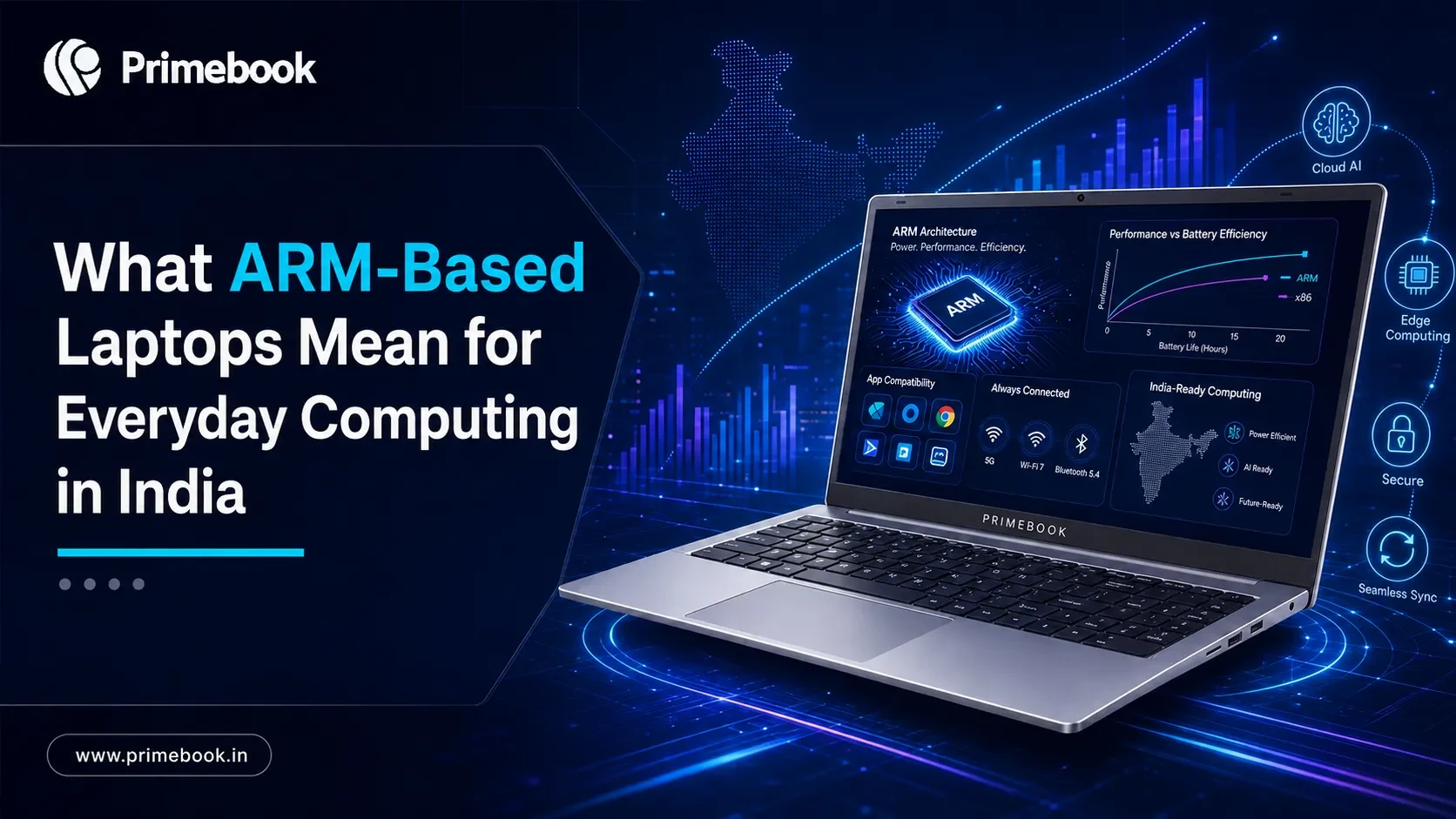
For most of the last two decades, choosing a laptop in India meant picking between Intel and AMD chips inside a Windows machine. That default is quietly breaking. ARM-based silicon, built on the same architecture that powers most smartphones in the country, has crossed the bridge into laptops, and the shift is now showing up in shipments rather than just headlines.
Counterpoint Research projects ARM laptops will move from 13% of global shipments in 2022 to 25% by 2027. For Indian buyers, that makes ARM a trend worth understanding rather than ignoring.
This piece breaks down what arm based laptops india buyers should actually know in 2026, where the tradeoffs lie, and how to read the next two years of releases without getting lost in marketing terms.
What Changed in the Laptop Chip Conversation
ARM started as a chip architecture built for efficiency, not raw clock speed. That made it ideal for phones, where battery life and heat dissipation matter more than peak performance. The same logic is now being applied to laptops as more operating systems and applications support ARM-based computing. Microsoft has redesigned Windows for ARM, while operating systems such as ChromeOS and PrimeOS have long been optimised for ARM-based hardware. Native applications and improved emulation have further broadened what users can do on ARM-based devices.
Also Read: PrimeOS vs ChromeOS
How ARM Shapes Everyday Computing in India
The implications of that shift are particularly visible in India, where notebook adoption continues to grow across students, professionals, and first-time buyers. IDC's India tracker recorded 14.4 million PCs shipped in 2024, up 3.8% year-on-year, with notebook shipments growing 9.6% YoY and premium notebooks above USD 1,000 up 13.8% YoY. The shift toward thin-and-light premium notebooks favours the design space ARM operates in, where long battery life, instant-wake behaviour, fanless designs, and mobile-inspired connectivity features are increasingly common.
Price pressure is also part of the story. Qualcomm has launched a Snapdragon C platform aimed at the sub-USD 300 segment (around Rs 28,500), with India listed among the launch markets for later this year. Sector analysis notes that MediaTek- and Unisoc-based ARM laptops are already selling below USD 200 in markets like India, often with 15-20+ hours of battery life and low-heat operation. These characteristics align closely with how many Indians actually use laptops: away from desks, across long days, and often without guaranteed access to charging.
Also Read: Laptop with Long Battery Backup
ARM vs x86: Where the Tradeoffs Actually Show Up
Most online comparisons reduce this to a single number, which misses how the two architectures behave in daily use. The differences show up in specific scenarios rather than across the board.
Who ARM-Based Laptops Suit, and Who They Don't
ARM and x86 increasingly serve different priorities, which makes workload more important than architecture labels alone. ARM-based laptops in India in 2026 are well suited to:
- Students who carry their device through college, libraries, and travel and cannot rely on consistent charging.
- Freelancers and remote workers whose work lives in browsers, docs, design tools, and communication apps.
- First-time laptop buyers who want a quiet, light, and responsive device for study, productivity, and everyday digital tasks.
They are a less obvious fit for users who depend on niche legacy Windows software, run heavy 3D rendering or simulation workloads, or rely on specialised peripherals that still ship x86-only drivers. Despite these limitations, ARM adoption continues to expand as software support improves and more manufacturers enter the category.
What Indian Buyers Should Evaluate Before 2027
ARM laptops are likely to become more common across Indian retail channels in the coming years. A few practical filters help cut through marketing noise:
- Check your actual app list. Open the apps you use weekly. Confirm each runs natively or through stable emulation on ARM. If even two critical apps fail, the device is the wrong fit regardless of specs.
- Read battery claims honestly. Look for tested figures from independent reviews under mixed use, not just video-loop numbers from brochures.
- Mind the chip generation. A 2026 ARM chip behaves very differently from one released two years earlier. Generation matters more than brand badge.
- Factor in service and warranty. Newer architectures sometimes have thinner local service networks. Check coverage in your city before committing.
- Match the screen and weight to your day. An 11-inch fanless device for a commuting student is a different decision from a 15-inch model for a home-based freelancer.
Context on adjacent decisions is useful here: the comparison in tablet vs laptop investments and the broader piece on trends in Android laptop technology both help round out the picture before a purchase.
Conclusion
ARM laptops are no longer a niche category defined by experimentation. They now represent a distinct approach to computing, one that prioritises efficiency, mobility, and all-day usability in different ways from traditional laptop designs. For buyers, the more useful question is no longer whether ARM is viable, but whether its strengths align with the way they actually use a computer.
FAQ
Are ARM-based laptops good for college students in India?
For most students whose work involves browsers, documents, video classes, and note-taking apps, ARM laptops handle the load comfortably while offering longer battery life and lighter builds. Students relying on specialised x86-only engineering or design software should check app compatibility first.
Will ARM eventually replace Intel and AMD chips in laptops?
Industry forecasts point to a steady rise rather than overnight replacement. Multiple projections expect ARM to reach 25-34% of the laptop market by 2027-2029, with continued x86 presence in performance and gaming segments.
Is now a good time to buy an ARM laptop in India?
It depends on workload fit. If your daily computing is browser-led and mobility-focused, ARM options in 2026 are mature enough to consider seriously. If you depend on specialised legacy software, waiting another year for wider compatibility is reasonable.
Editorial Transparency: Primebook's editorial team uses a combination of human expertise, research, and AI-powered tools to create and refine content. Every article is reviewed and validated by our team before publication to ensure accuracy, clarity, and usefulness for readers.